Live Lead Times: from 5 working days UK Manufactured & Worldwide Shipping 01903 205 532 [email protected]
🏭 UK Silicone Extrusion Manufacturer · Est. 1991

Oven Door Seals

High-temperature silicone oven door seals and gaskets manufactured in Worthing, West Sussex. Tadpole, P, e and D section profiles plus fully custom cross-sections — supplied in continuous lengths, cut to length, or vulcanised into joined rings made to your exact door size. For appliance OEMs, catering equipment builders, industrial oven manufacturers and replacement buyers alike.


BSI ISO 9001 & ISO 14001 Certified Made in Britain
Up to +300°C
HT Grade Continuous Service
Shore A 20–80
Hardness Range
10m
Minimum Order — No Maximum
Est. 1991
Worthing, West Sussex

Why Silicone Is the Material for Oven Door Seals

An oven door seal has one of the hardest jobs of any gasket. Every time the door opens, the seal goes from oven temperature to room temperature and back — often dozens of times a day in a commercial kitchen. Organic rubbers such as EPDM or Neoprene harden, crack and lose their spring above about 130°C. Silicone rubber (VMQ) shrugs off this thermal cycling: it stays flexible from -50°C right up to +200°C as standard, and up to +300°C in our high-temperature grade — enough for pyrolytic self-cleaning cycles and industrial process ovens.

Just as important is compression set resistance — a seal's ability to spring back after being squashed. Silicone's compression set is excellent even at elevated temperatures, so an extruded silicone oven door gasket keeps sealing tightly door-close after door-close, year after year. That means stable cooking temperatures, lower energy consumption, and no heat leaking onto control panels, hinges or worktops.

For catering and food-processing equipment, silicone is also available in food-safe grades compliant with FDA 21 CFR 177.2600 and EC 1935/2004 — something most organic rubbers cannot offer.

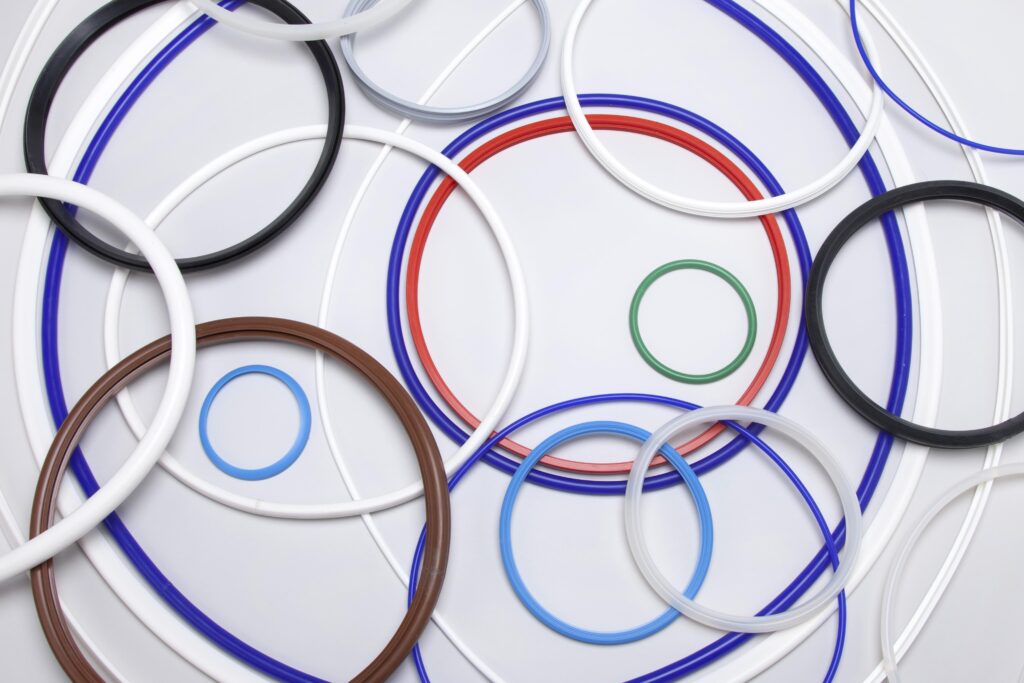
Viking Extrusions manufactures the complete oven door seal, in-house, in the UK: we extrude the profile from our own compound, cut it to length, and can vulcanise it into a continuous joined ring made precisely to your door dimensions — no corners to bodge, no joints to fail.

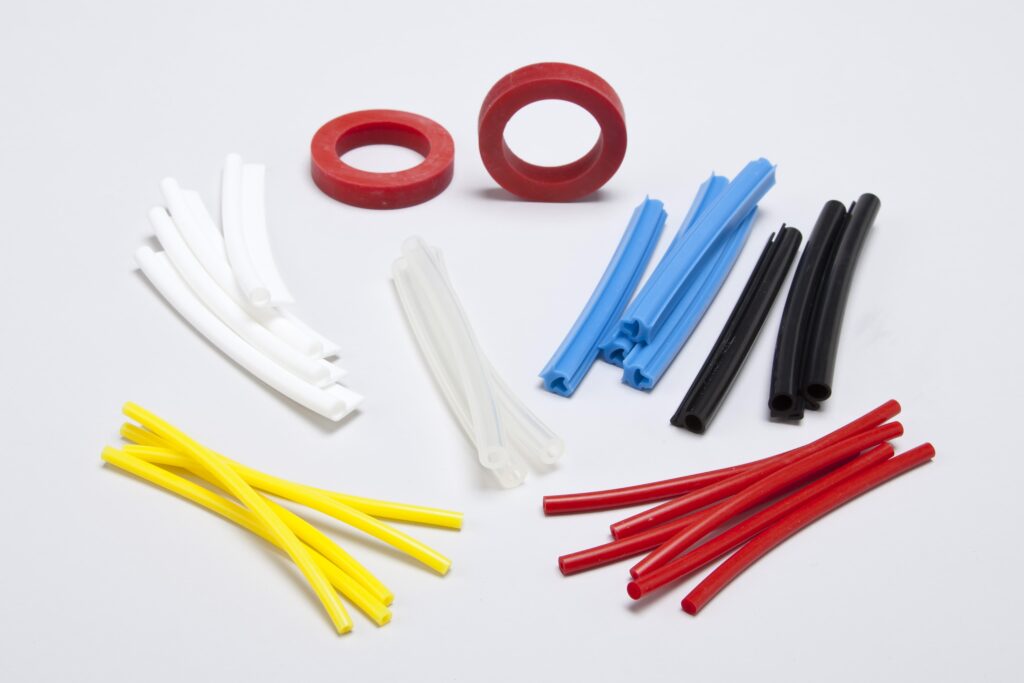
Silicone oven door seal profiles extruded by Viking Extrusions in Worthing
🌡️
Handles Thermal Cycling
Flexible from -50°C to +300°C (HT grade)
🔄
Low Compression Set
Springs back after every door close
🍽️
Food-Safe Grades
FDA & EC 1935/2004 compliant
Joined Rings
Vulcanised to your exact door size
✂️
Cut to Length
Ready-to-fit pieces, no waste
🇬🇧
UK Manufactured
Extruded in Worthing since 1991
PROFILE TYPES

Oven Door Seal Profiles We Manufacture

Most oven doors use one of a handful of proven seal profiles. We extrude all of them from stock tooling — and if your door needs something different, we tool custom profiles from 5 working days. Click any profile to view specifications.

Not sure which profile your oven uses? Post us a short sample of the old seal — even a hardened, brittle one — and our engineers will identify the cross-section, match the material grade and quote a like-for-like replacement. All profiles are extruded to BS 3734-1 / ISO 3302-1 tolerance Class E3 as standard.

MATERIAL GRADES

Silicone Grades for Oven Door Seals

We compound our own silicone in-house, so every oven door seal is extruded in the right grade for its duty — from domestic appliances to +300°C industrial process ovens.

High Temperature
HT Silicone — up to +300°C
Our extended-temperature grade for pyrolytic self-cleaning ovens, industrial and process ovens, furnace doors and kiln seals. Low heat ageing keeps the seal flexible through thousands of cycles.
  • Continuous service to +300°C
  • Excellent heat-ageing resistance
  • Retains flexibility at extremes
  • First choice for industrial oven seals
Food Safe
FDA / EC 1935 Food-Grade Silicone
Compliant silicone for catering ovens, bakery ovens, combi steamers and food-processing equipment where the seal may contact food or food vapours.
  • FDA 21 CFR 177.2600
  • EC 1935/2004 compliant
  • Odourless and tasteless
  • Steam and autoclave resistant
General Purpose
Standard Silicone (VMQ)
The cost-effective workhorse for domestic oven doors, warming drawers and appliance gaskets operating up to +200°C continuous.
  • Temperature: -50°C to +200°C
  • Shore A 20 to 80
  • Excellent compression set
  • Any colour — RAL matched

For direct food contact and the most demanding hygiene requirements, our food-grade compounds are also available platinum-cured — offering lower volatiles and higher purity than standard peroxide-cured silicone. Read our guide to platinum vs peroxide cured silicone to see which is right for your equipment.

OVEN SEAL REPLACEMENT

How to Measure and Replace an Oven Door Seal

A hardened, cracked or sagging door seal lets heat escape, lengthens cooking times and wastes energy. Replacing it is straightforward — here's how to get the measurements right first time.
1
Remove the Old Seal
With the oven cold, ease the old seal out of its channel or unclip it from the door frame. Most oven door seals simply pull free from retaining holes, clips or a groove. Keep an undamaged section — you'll need it for the next step.
2
Measure the Cross-Section
Cut a short piece from an undamaged area and measure the overall width and height with callipers. Note the profile shape (tadpole, P, e or D section) and any fixing feature — bulb diameter, tail length or stem width. Better still, post the sample to us and we'll identify it.
3
Measure the Length or Door Size
For a cut length, measure the old seal end to end, or the channel it sits in. For a four-sided joined ring, measure the width and height of the seal path around the door aperture — centreline to centreline — and we'll vulcanise a continuous ring to suit.
4
Fit the New Seal
Starting at a top corner, press the new seal into its channel or clips, working evenly around the door without stretching it. Close the door gently to check for even contact all round — a correctly fitted silicone seal should compress slightly along its full length.

Stuck on any of these steps? Send us a photo and your measurements — our team quotes oven seal replacements every week and will confirm the right profile before you order.

APPLICATIONS

Where Our Oven Door Seals Are Used

From a single replacement gasket to scheduled OEM production, the same UK-made extrusions seal ovens across every sector.

🏠
Domestic Appliance OEMs
Door seals and gaskets for cookers, ranges and built-in ovens — scheduled deliveries to production lines
👨‍🍳
Commercial Catering Ovens
Food-grade seals for combi ovens, bakery deck ovens, pizza ovens and holding cabinets
🏭
Industrial & Process Ovens
HT-grade door seals for curing, drying, powder-coating and heat-treatment ovens up to +300°C
🧪
Autoclaves & Sterilisers
Steam-resistant silicone door gaskets for autoclaves and sterilisation chambers
🔬
Laboratory Ovens
Precision door seals for drying cabinets, incubators and environmental test chambers
🔧
Repair & Maintenance
Like-for-like replacement seals identified from a sample — from 10 metres, no OEM part number needed

Explore more silicone sealing solutions for ovens and appliances, or see our food-grade capabilities for the food and dairy industry.

BUYER'S GUIDE

OEM Supply or One-Off Replacement — We Do Both

Whether you build ovens or maintain them, the same in-house extrusion, cutting and joining capability works for you.

For OEMs & Equipment Builders

If you manufacture domestic appliances, catering equipment or industrial ovens, we supply production quantities on schedule — continuous coils for your assembly line, pieces cut to length ready to fit, or fully joined door-seal rings delivered as a finished component. Our engineers will review your door design, recommend the right profile geometry, hardness and grade for the closure force and temperature involved, and produce bespoke tooling from 5 working days. Because we compound, extrude, cut and join everything in-house at our Worthing factory, you get one accountable UK supplier, full batch traceability to ISO 9001, and the ability to iterate a profile design quickly during prototyping — starting from just 10 metres.

For Replacement & Maintenance Buyers

Oven out of production, or the OEM spare discontinued? You don't need a part number — you need the profile matched. Post us a short section of your old seal (even hardened or cracked) and we'll identify the cross-section, match the silicone grade and quote a like-for-like replacement, supplied as a cut length or a joined ring vulcanised to your door dimensions. This is how facilities teams keep older commercial catering ovens, laboratory ovens, autoclaves and process ovens in service for years after spares disappear. Typical replacement orders are small — our 10-metre minimum keeps a single-oven repair affordable, and multiple doors can share one order.

WHY VIKING EXTRUSIONS

A UK Manufacturer, Not a Reseller

Every oven door seal we sell is extruded, cured, cut and joined at our own factory in Worthing — which is why we can match obsolete profiles and hold tight tolerances.

🏭
UK Manufacturing
Made in Worthing, West Sussex since 1991. Short supply chains, fast delivery, easy site visits.
📐
In-House Tooling
We make all our own extrusion dies — custom door-seal profiles tooled from 5 working days.
Joining & Finishing
Cut to length and vulcanised joined rings produced on site — a complete door seal, not just a coil.
Quality Assured
ISO 9001 certified, with full traceability from raw compound to finished seal on every batch.
TECHNICAL SPECIFICATIONS

Oven Door Seal Specifications

Every seal is extruded, inspected and finished at our Worthing factory to the specifications below.

PropertySpecificationNotes
Temperature — Standard-50°C to +200°CDomestic and commercial ovens, warming drawers, appliance gaskets
Temperature — HT GradeUp to +300°C continuousPyrolytic, industrial and process ovens
HardnessShore A 20 to 80Shore A 40–60 typical for door seals
Profile TypesTadpole, P, e/E, D, hollow bulb + customNew bespoke tooling from 5 working days
Profile Size RangeCross-sections up to 200mm wideMin wall thickness 0.5mm
TolerancesBS 3734-1 / ISO 3302-1 Class E3 standardClass E2 close tolerance available on request
Food SafetyFDA 21 CFR 177.2600, EC 1935/2004Platinum-cured option for highest purity
Supply FormatContinuous lengths, cut to length, joined ringsJoined rings vulcanised to any door size
Minimum Order10 metresNo maximum — continuous production
FREQUENTLY ASKED QUESTIONS

Oven Door Seal FAQ

What material is best for oven door seals?
Silicone rubber (VMQ) is the best material for oven door seals. Unlike organic rubbers such as EPDM or Neoprene, which harden and crack above 130°C, silicone withstands continuous service at 200°C as standard and up to 300°C in high-temperature grades. It also has excellent compression set resistance, so the seal keeps springing back door-close after door-close, and it is available in FDA and EC 1935/2004 compliant food-safe grades — essential for catering and food-processing ovens.
What temperature can silicone oven door seals withstand?
Standard silicone oven door seals operate continuously from -50°C to +200°C. For pyrolytic self-cleaning ovens, industrial process ovens and furnaces, Viking Extrusions manufactures a high-temperature (HT) silicone grade rated up to +300°C continuous service. Silicone retains its flexibility and sealing force across this entire range, including during the repeated heating and cooling cycles that destroy organic rubber seals.
Can you replace just the oven door seal?
Yes. In most ovens the door seal is a serviceable part designed to be replaced without changing the door. Most seals either clip into holes or a channel around the door frame, or slide into a retaining groove. If your existing seal has hardened, cracked or lost its spring, send us a short sample section — we will identify the profile, match the material grade, and supply a replacement cut to length or vulcanised into a continuous joined ring to your door size.
Can you make food-safe oven seals?
Yes. We extrude oven door seals in food-safe silicone compliant with FDA 21 CFR 177.2600 and EC 1935/2004, suitable for commercial catering ovens, bakery ovens and food-processing equipment. For the most demanding food and pharmaceutical applications we also offer platinum-cured silicone, which has lower volatiles and superior purity compared with standard peroxide-cured material.
Do you make custom oven door seal sizes and profiles?
Yes. As well as standard tadpole, P, e and D section profiles, Viking Extrusions designs and manufactures fully custom oven door seal profiles. We produce all extrusion tooling in-house — typically within 5 to 10 working days — so a bespoke cross-section matched to your door design is fast and affordable. Minimum order is just 10 metres, and we can supply continuous lengths, pieces cut to length, or joined rings vulcanised to your exact door dimensions.
How do I measure my oven door seal?
First remove the old seal and cut a short cross-section from an undamaged area. Measure the overall width and height of the cross-section with callipers, plus any fixing feature — the bulb diameter and tail length on a tadpole seal, or the stem width on a push-in profile. Then measure the length: for a cut length, measure the old seal or the channel it sits in; for a four-sided joined ring, measure the width and height of the seal path around the door aperture, centreline to centreline. If in doubt, post us a sample section and we will identify it for you.
Need an Oven Door Seal Made or Matched?

Send us a drawing, a sample of your old seal, or just your door dimensions — our engineering team will identify the profile, recommend the right silicone grade and provide a no-obligation quotation. From one replacement ring to full OEM production.

Viking Extrusions Ltd · Silicone Oven Door Seal Manufacturers · Est. 1991 · Worthing, West Sussex, UK