Live Lead Times: from 5 working days UK Manufactured & Worldwide Shipping 01903 205 532 [email protected]
🏭 UK Manufacturer of Rubber Blocks · Est. 1991

Rubber Blocks

Solid blocks of rubber manufactured to your dimensions in Worthing, West Sussex — anti-vibration mounts, buffers, machine feet, packing and spacer blocks in silicone, EPDM, nitrile, neoprene, FKM and natural rubber. From a single block to production quantities.

Shore A 30–90
Hardness Range
6 Materials
Silicone to Natural Rubber
ISO 3302-1
Class M3 Standard Tolerances
Made in UK
Worthing, West Sussex
WHAT BLOCKS OF RUBBER DO

One Simple Shape, Dozens of Jobs

A solid rubber block is engineering's quiet workhorse — absorbing shock, isolating vibration, spreading load and protecting whatever it sits between.

Anti-Vibration Mounts
Machine mounting blocks that isolate vibration before it reaches floors, frames and neighbouring equipment
Buffers & Bump Stops
Impact-absorbing blocks for doors, gates, machinery travel limits and vehicle applications
Machine Feet & Levelling Pads
Load-bearing blocks that level equipment, protect floors and stop machinery walking
Packing & Spacer Blocks
Solid rubber packers and spacers for assembly gaps, clamping faces and load spreading
Dock & Fender Blocks
Heavy-duty protection blocks for loading bays, quaysides and marine contact points
Press & Jig Pads
Sacrificial and protective blocks for press beds, jigs, fixtures and workholding

Solid Rubber Blocks, Made to Your Dimensions

Viking Extrusions manufactures custom rubber blocks at our factory in Worthing, West Sussex — established 1991. Send a drawing, a sketch with dimensions, or even a worn sample, and we will produce blocks of rubber in the right material and hardness for the job, from a one-off replacement to scheduled production quantities.

Most blocks are made by compression moulding — solid sections cure uniformly in a heated tool, and tooling for simple block geometry is the most economical in moulding. Thin blocks and pads can instead be cut from cured silicone rubber sheet, and we quote whichever route is cheaper for your size and quantity.

Every batch is manufactured to ISO 9001 disciplines with full material traceability. Dimensions follow ISO 3302-1 Class M3 as standard, with tighter classes available on a case-by-case basis after engineering review.
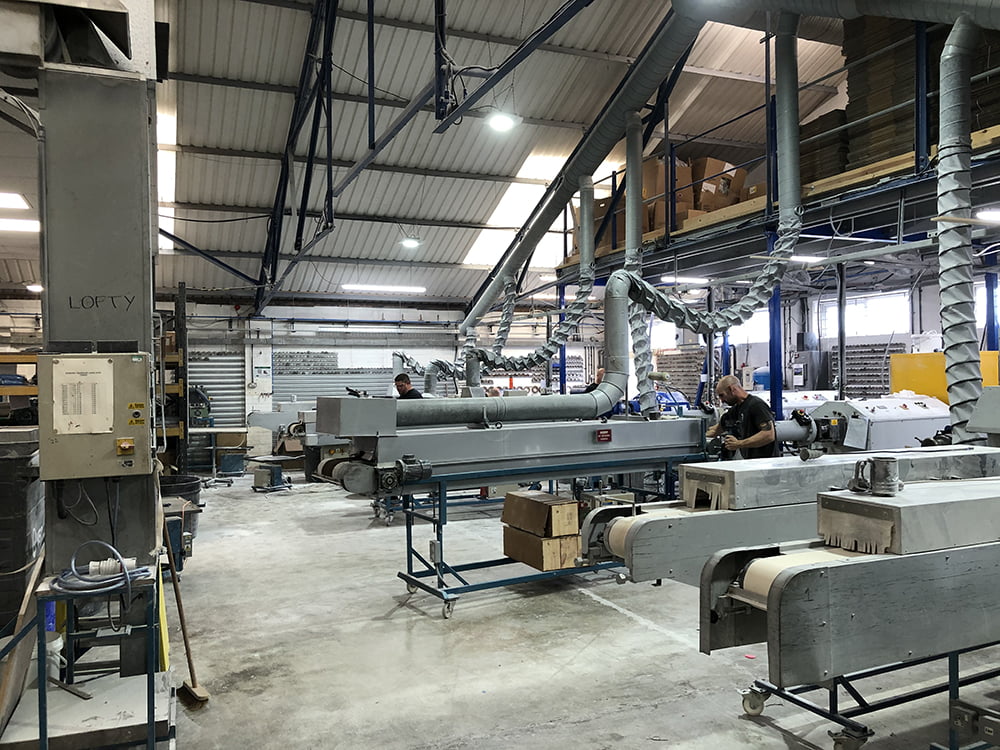
Rubber manufacturing at Viking Extrusions, Worthing — custom rubber blocks made to order
📐
Any Dimensions
Made to your drawing or sample
🎯
Shore A 30–90
Hardness matched to the load
🍽️
FDA Grades
Food-safe silicone available
🎨
Any Colour
Black standard for organics
📦
One-Offs Welcome
No quantity too small to quote
🇬🇧
UK Manufactured
All production in Worthing
AT A GLANCE

Rubber Block Materials Compared

Typical working ranges — exact figures depend on the specific compound and grade.

MaterialTypical HardnessTypical Temp RangeBest For
Natural Rubber (NR)Shore A 40–80-50°C to +80°CAnti-vibration mounts, impact pads, fenders
EPDMShore A 40–85-40°C to +130°COutdoor blocks, weather-exposed pads
Nitrile (NBR)Shore A 40–90-30°C to +100°CBlocks near oils, fuels and greases
Neoprene (CR)Shore A 40–85-35°C to +110°CGeneral engineering, marine, moderate oil
Silicone (VMQ)Shore A 30–80-50°C to +200°CTemperature extremes, food contact, hygiene
FKM / Viton®Shore A 60–90-20°C to +200°CAggressive chemicals, fuels at temperature

Rule of thumb on hardness: choose the softest block that carries your load without excessive deflection — softer isolates vibration better, harder carries more weight.

FROM DRAWING TO DELIVERED BLOCK

How Rubber Blocks Are Made

1
Tell Us the Job
A drawing, a sketch with dimensions, or a sample — plus the load, environment (outdoors? oil? heat?) and how many you need. That's enough for a quote.
2
Material & Route
We recommend the compound and hardness, and whether your blocks are most economical moulded in a tool or cut from cured sheet.
3
Manufacture
Blocks are moulded and vulcanised under controlled temperature and pressure, then trimmed and inspected against the drawing to ISO 3302-1 Class M3.
4
Repeat Orders
Your tooling stays dedicated to your parts, so repeat blocks match the first batch — years later, from the same tool and specification.
Need a Long Section Instead?
Constant cross-section strips and profiles are usually cheaper to extrude by the metre
Silicone rubber strips →
Need Thin Pads or Gaskets?
Flat pads and gaskets are cut from sheet — often with no tooling cost at all
Silicone rubber gaskets →
FREQUENTLY ASKED QUESTIONS

Rubber Blocks FAQ

What are rubber blocks used for?
Rubber blocks are solid elastomer components used wherever machinery or structures need cushioning, isolation or protection: anti-vibration machine mounts, buffers and bump stops, levelling feet, packing and spacer blocks, dock and loading-bay protection, and press or jig pads. Because rubber combines high friction with elastic recovery, a correctly specified block absorbs shock and vibration that would damage rigid components.
Can you manufacture rubber blocks to my dimensions?
Yes — custom blocks of rubber are our standard work, not an exception. Send a drawing, sketch or sample and we will manufacture blocks to your dimensions in the right material and hardness. Thinner blocks and pads can also be cut from our silicone rubber sheet range. Tolerances follow ISO 3302-1 Class M3 as standard, with tighter classes available on a case-by-case basis after engineering review.
Which rubber is best for anti-vibration blocks?
Natural rubber is the classic anti-vibration material — outstanding resilience, damping and tear strength — which is why it dominates machine mounts and bearing pads. Where oil or fuel is present, nitrile is the safer choice; outdoors, EPDM or neoprene resist weathering and ozone; and at temperature extremes, silicone keeps its elasticity from -50°C to +200°C. Tell us the environment and we will recommend the right compound.
What hardness should a rubber block be?
It depends on the job: softer blocks (Shore A 30–50) give more deflection and better vibration isolation; mid-range blocks (Shore A 50–70) suit general mounting and packing; harder blocks (Shore A 70–90) carry heavier loads with minimal compression. As a rule, choose the softest block that carries the load without excessive deflection — our technical team can advise from your load and application details.
Are your rubber blocks moulded or cut?
Both, depending on geometry and quantity. Most blocks are compression moulded in a heated tool, which suits solid sections, larger blocks and repeat production. Thin blocks, pads and washers can be more economical to cut from cured sheet. We will quote the most economical route for your size and volume — including tooling, quoted separately, if a mould is needed.
What tolerances do moulded rubber blocks achieve?
Moulded rubber dimensions follow ISO 3302-1 tolerance classes M1 (precision) to M4 (coarse); Class M3 is our standard for moulded blocks, with tighter classes available on a case-by-case basis after engineering review. For most block applications — mounts, buffers, packing — M3 is more than sufficient; only tighten dimensions that matter functionally, as tighter classes increase tooling and inspection cost.
Get a Rubber Blocks Quote

Send your dimensions, material or application details — we'll recommend the right rubber and hardness, and quote the most economical manufacturing route.

Viking Extrusions Ltd · Custom Rubber Blocks Manufactured in the UK · Est. 1991 · Worthing, West Sussex